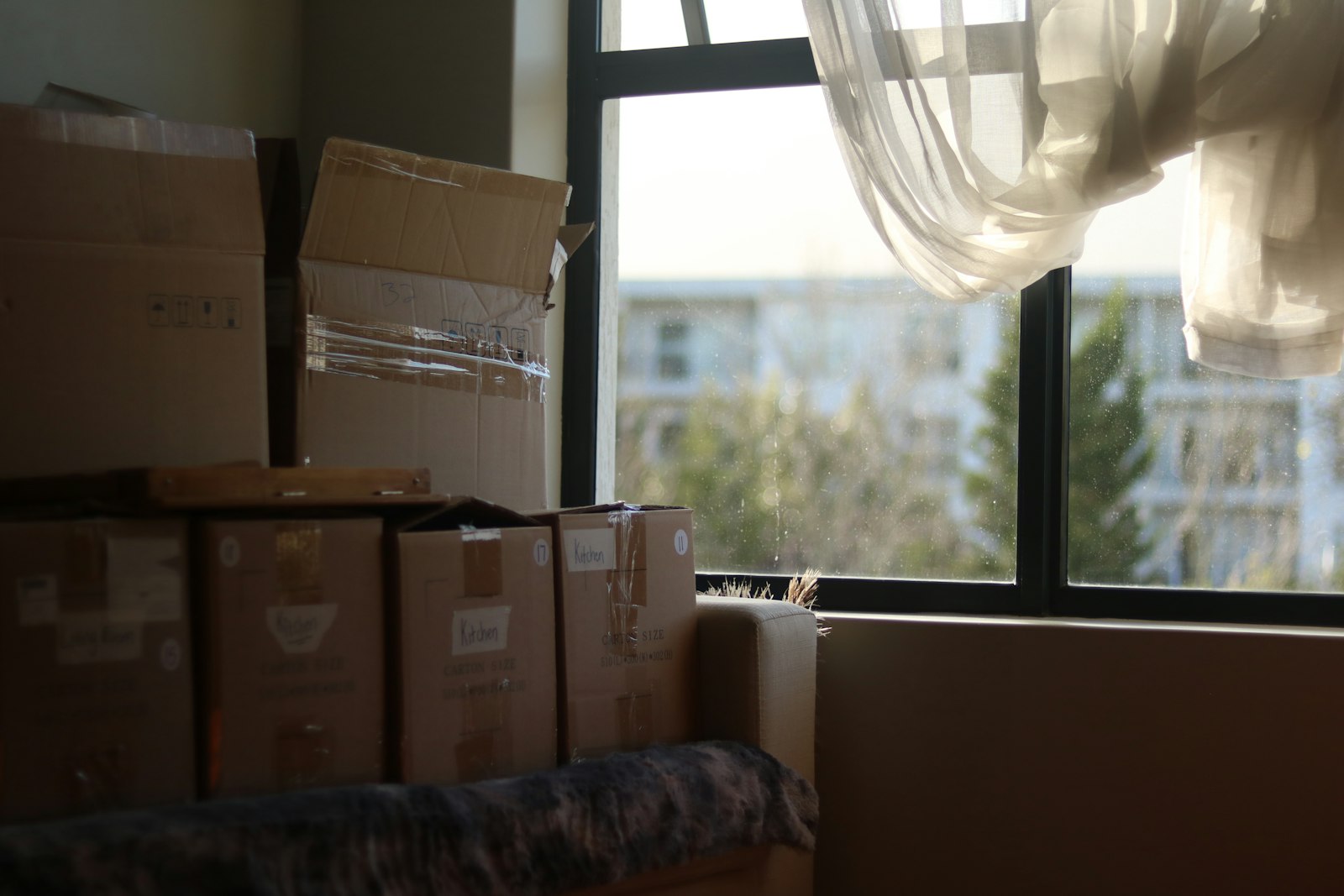
Leaving your premises to grow, cut costs or move closer to your customers? A business relocation is mostly a matter of timing: in Switzerland, a commercial lease can be terminated with at least six months’ notice, and your new space has to be ready when the old one is handed back. This guide brings together the Code of Obligations rules, a month-by-month timeline and the formalities not to forget, for companies in the Lausanne area.
Key points in 30 seconds
- Minimum notice of six months for commercial premises, for the date set by the lease or local custom, otherwise the end of a three-month lease period (art. 266d CO). In the canton of Vaud, the customary dates are 1 April, 1 July and 1 October.
- Termination in writing, signed by every tenant on the lease, and received by the landlord before the notice period starts.
- To leave earlier: propose a solvent replacement tenant (art. 264 CO) or transfer the lease with the landlord’s written consent (art. 263 CO).
- At handover, the landlord must inspect the premises and report defects immediately (art. 267a CO). Do a joint inspection.
- Allow 9 to 12 months between the decision and the move, and report the new address to the commercial register.
By the MixCity team · Updated 16 November 2026 · General information, not legal advice.
Contents
- Read your lease first
- Notice period for a commercial lease
- Leaving early: three options
- Timeline from 12 months out to moving day
- Handing back the premises and the inspection
- Getting your rent deposit back
- Administrative formalities
- Choosing your new premises
- Frequently asked questions
Read your lease first
Everything starts with the contract. Before setting a date, take out your lease and note five things:
- The term: a fixed-term lease (say 5 or 10 years) ends at expiry without notice, but many commercial leases renew automatically unless terminated in time. An open-ended lease is terminated for a given date.
- Notice period and dates: the contract may set a longer period than the six-month legal minimum, and specific dates (often the end of a quarter).
- Restoration clauses: did you agree in writing to remove your fit-out when leaving?
- The rent deposit: its amount and the bank holding it.
- Options: subletting rights, transfer clause, extension option.
If several parties are on the lease (partners, group companies), check who the tenants are: all of them must sign the termination. For a refresher on the contract itself, see our guide to commercial leases in Switzerland.
Notice period for a commercial lease
The Code of Obligations sets a simple framework for commercial premises. Either party may terminate the lease with six months’ notice, for the date set by local custom or, failing that, for the end of a three-month lease period (art. 266d CO). The contract may provide for a longer period, never a shorter one.
In the canton of Vaud, the Rules and rental customs (RULV), which also cover commercial premises, set three customary termination dates: 1 April, 1 July and 1 October, at noon. There is no customary date on 1 January. These dates apply if your lease does not set others; many commercial leases have their own dates, so check yours.
Three practical rules prevent nasty surprises:
- Written form. Termination must be in writing (art. 266l CO). The landlord must use an official form; for the tenant, a signed letter is enough.
- Date of receipt. The notice period runs from when the landlord receives the letter, not from when you send it. Send it by registered mail a few days before the deadline, or hand it over against signature.
- Late notice is still valid. If the period or date is not respected, the termination takes effect on the next possible date (art. 266a CO). A few days’ delay can cost you three extra months of rent.
| You want to leave on… | Your letter must be received by… |
|---|---|
| 1 April 2027, noon | 30 September 2026 |
| 1 July 2027, noon | 31 December 2026 |
| 1 October 2027, noon | 31 March 2027 |
| 1 April 2028, noon | 30 September 2027 |
Find your termination deadline
Choose your notice period and the termination dates in your lease: you get the next possible end dates and the last day your letter must reach the landlord.
| Lease ends on | Letter received by |
|---|
Indicative calculation. A registered letter that is not collected can arrive several days later, so send yours at least 10 days before the deadline. For a fixed-term lease, only the expiry date in the contract counts.
How much does a late notice cost? Using the median rents we surveyed in October 2026 in West Lausanne, one extra quarter of rent for 300 m² comes to:
| For 300 m² | Median asking rent | One extra quarter of rent |
|---|---|---|
| Depot | CHF 140/m²/year | CHF 10,500 |
| Workshop | CHF 230/m²/year | CHF 17,250 |
| Offices | CHF 270/m²/year | CHF 20,250 |
| Retail space | CHF 280/m²/year | CHF 21,000 |
Leaving early: three options
Is your new space available before your lease ends? Paying two rents for months is not inevitable. The law provides two mechanisms, and an agreement is always possible.
| Option | How it works | What you need | What you still owe |
|---|---|---|---|
| Early return (art. 264 CO) | You hand back the premises early and propose a new tenant. | A solvent candidate the landlord cannot reasonably refuse, willing to take over the lease on the same terms. | Without an acceptable candidate, rent until the next termination date or the end of the lease. |
| Lease transfer (art. 263 CO) | A third party takes over your commercial lease and becomes the tenant. | The landlord’s written consent, which can only be refused for good cause. | You remain jointly liable with the new tenant until the lease ends or could be terminated, for two years at most. |
| Termination agreement | Landlord and tenant agree on an end date. | A written agreement, sometimes a payment or covering some works. | Whatever is negotiated. |
A lease transfer is often the best option if you fitted out the space: a business in the same sector (a restaurant, a workshop) may buy your installations. Early return suits standard premises better. Either way, send the landlord a complete file on the candidate: commercial register extract, debt collection record, intended use.
Timeline from 12 months out to moving day
A business relocation involves the whole team. The more technical the activity (workshop, shop, lab), the earlier you need to start. Here is a typical timeline for a six-month notice period.
| When | What to do |
|---|---|
| 12 to 9 months before | Define the need (size, use, budget, location). Read the lease. Visit premises and ask about availability. |
| 9 to 7 months before | Compare offers, negotiate the new lease (start date, works, any rent-free period). Check zoning and any permits. |
| 6 months before (at the latest) | Sign the new lease. Send the termination by registered mail, or propose a successor. Get quotes from movers. |
| 4 to 3 months before | Plan the fit-out, IT, telephony and electrical work. Arrange parking permits for moving day. |
| 2 months before | Inform customers, suppliers and partners. Order stationery, signage and new business cards. Sort, archive, sell or recycle. |
| 1 month before | Set the move-out and move-in inspection dates. Activate mail forwarding. Prepare the commercial register filing. |
| Moving day | Move, photograph the empty old space, carry out the move-out inspection and return all keys against a receipt. |
| Afterwards | Report the new address to the authorities, update your website and online listings, follow up on the deposit. |
The most sensitive point is the overlap between the two leases. Ideally, negotiate a start date in the new space that leaves a few weeks for fit-out before the old lease ends. Each month of double rent adds up quickly: about CHF 6,750 for 300 m² of offices at the West Lausanne median rent.
For moving day, reserve the truck’s parking space with the police of each municipality involved, at both ends. The City of Lausanne, for example, offers online booking of parking spaces for a move (in French).
Looking for your next space near Lausanne?
At MixCity in Renens, 5 minutes from the A1 motorway: depots, workshops, offices and retail spaces from 300 m². Ask for the available spaces and when they free up, so you can set your timeline now.
Handing back the premises and the inspection
At the end of the lease, you must return the premises in the condition resulting from use in line with the contract (art. 267 CO). Normal wear and tear is not your responsibility; damage is. A clause requiring you to pay more than the actual damage is void.
Your own fit-out often raises questions. If the landlord approved it in writing, they can only require restoration if this was agreed in writing (art. 260a CO). So dig out the approvals from back then. Conversely, if approved alterations leave the premises with a significant increase in value at the end of the lease, you can claim compensation (art. 260a para. 3 CO): something to negotiate before you leave, not after.
For their part, the landlord must inspect the premises at handover and report defects you are liable for immediately (art. 267a CO). If they fail to do so, they lose their rights, except for defects a normal inspection could not reveal, which they must report as soon as they find them. To protect yourself:
- Carry out a joint inspection with both parties present and sign a report. If you disagree on a point, note your reservations.
- Take dated photos of every room, floors, walls and installations, at move-in and move-out.
- Clean, fix minor damage, and remove signs and plates.
- Return all keys and badges against a receipt.
The same care applies to the move-in inspection of your new space: any defect not recorded could be held against you when you leave.
Getting your rent deposit back
If you paid a deposit in cash or securities, it must be held in a bank account in your name (art. 257e CO). The bank only releases it with both parties’ consent, or on the basis of an unchallenged payment order or a court ruling.
If, within one year of the end of the lease, the landlord has not brought any claim against you in court or debt collection proceedings, you can ask the bank to release the deposit. In practice, a move-out inspection without reservations gets you the landlord’s consent much sooner. For commercial premises, the three-month rent cap does not apply: the deposit is freely negotiated.
If you disagree about the inspection, restoration costs or the deposit, the first step is the conciliation commission of the prefecture of the district where the premises are located (in French): West Lausanne for Renens, Lausanne for the city of Lausanne.
Administrative formalities
The move is only complete once every address is up to date. Authorities do not inform each other: each notification has to be made separately.
| Who | What | Good to know |
|---|---|---|
| Commercial register | Report the new address or the transfer of registered office. | Within the same municipality, it is a simple address change, possible online via EasyGov. In another municipality, the registered office changes: for an SA or Sàrl, the articles of association must be amended by notarial deed. Fee: CHF 30. |
| FTA (VAT) | Report the new address if the company is VAT-registered. | Via the FTA ePortal. |
| AHV/AVS, pension fund, accident insurance | Report the employer’s address. | Also update your daily sickness allowance insurance. |
| Taxes | Inform the cantonal tax administration. | Moving the registered office to another municipality changes the municipal tax. |
| Insurance | Update property and business liability insurance. | Check cover during transport and on moving days. |
| Swiss Post and providers | Mail forwarding, banks, energy, telecoms, leasing. | Forwarding for 6 to 12 months avoids lost invoices. |
| Online | Website, legal notice, Google Business Profile, directories, email signatures, invoices. | A consistent address everywhere helps your local search ranking. |
In terms of cost, registering a change of address or registered office with the commercial register costs a CHF 30 fee. If the registered office moves to another municipality, add notary fees: amending the articles of association of an SA or Sàrl requires a notarial deed.
Choosing your new premises
Moving is a chance to fix what did not work: an awkward layout, difficult delivery access, poor visibility. Before signing, go back over your real needs and ask the right questions. To compare rents, our article on commercial rental prices in Lausanne and the canton of Vaud gives current ranges, and our guide to renting business premises near Lausanne covers the selection criteria.
Depending on your activity, the points to check differ:
- Storage and logistics: loading docks, goods lifts, ceiling height, floor load, truck access. See our depot and warehouse for rent in Renens page.
- Production and crafts: electrical power, ventilation, ground-level access, noise. See workshop for rent in Renens.
- Offices: natural light, partitioning, public transport, parking. See offices for rent in Renens.
- Retail, food service, sport: visibility, shop front, extraction, zoning. See retail space for rent in Renens.
MixCity, avenue des Baumettes 21 in Renens, brings these four uses together in one building, 5 minutes from the A1 motorway. Spaces are available from 300 m², which also lets you bring a depot and offices that used to be apart onto a single site. The building at a glance: MixCity in 10 figures.
Plan your move with a single point of contact
Tell us your size, use and the date you need to leave your current premises. We will get back to you with matching spaces and their availability.
Frequently asked questions about moving a business
At least six months, for the date set by local custom or, failing that, for the end of a three-month lease period (art. 266d CO). The contract may set a longer period. The landlord must receive the letter before the notice period starts.
The Vaud Rules and rental customs (RULV) set three customary dates: 1 April, 1 July and 1 October, at noon. They apply if the lease does not set other dates. With six months’ notice, a termination for 1 April must therefore be received by 30 September.
It is not void: it takes effect on the next possible date (art. 266a CO). You will therefore pay rent until then, often three more months.
Yes, by proposing a solvent replacement tenant who is willing to take over the lease on the same terms and whom the landlord cannot reasonably refuse (art. 264 CO). Otherwise, you owe rent until the next termination date or the end of the lease.
With a lease transfer (art. 263 CO), a third party takes over your contract with the landlord’s written consent, and you remain jointly liable for two years at most. With a replacement tenant (art. 264 CO), a new lease is signed and you are released once they move in.
You must return them in the condition resulting from use in line with the contract; normal wear and tear is not your responsibility. For fit-out approved in writing by the landlord, restoration is only owed if it was agreed in writing (art. 260a CO).
As soon as the landlord consents, usually after a move-out inspection without dispute. Otherwise, if the landlord has started no debt collection or court proceedings within a year of the end of the lease, you can ask the bank directly (art. 257e CO).
Yes. An address change within the same municipality is simple to report, including online via EasyGov. A move to another municipality is a transfer of registered office: for an SA or Sàrl, it means amending the articles of association by notarial deed. The commercial register fee is CHF 30.
Allow 9 to 12 months: the six-month notice period plus the time to find and negotiate new premises. For a workshop, shop or restaurant that needs fit-out works, allow more.
Sources
- Swiss Code of Obligations (CO), art. 253 ff.: leases (Fedlex)
- WEKA – Commercial premises: key points on termination (in French)
- WEKA – Returning leased premises and restoring them (in French)
- Swiss Confederation SME portal – Changing a company’s registered office or address (in French)
- EasyGov.swiss – online commercial register filings
- Canton of Vaud – Rules and rental customs (RULV), art. 35: customary dates (in French)
- Canton of Vaud – Rental conciliation (prefectures, in French)
- Swiss Banking Ombudsman – Return of a rent deposit (art. 257e CO, in French)
- City of Lausanne – Reserving a parking space for a move (in French)
This article gives general information on Swiss tenancy law. It is not a substitute for legal advice tailored to your contract.
Want to see our guides and news first in Google results?
Add MixCity to your preferred sources on Google